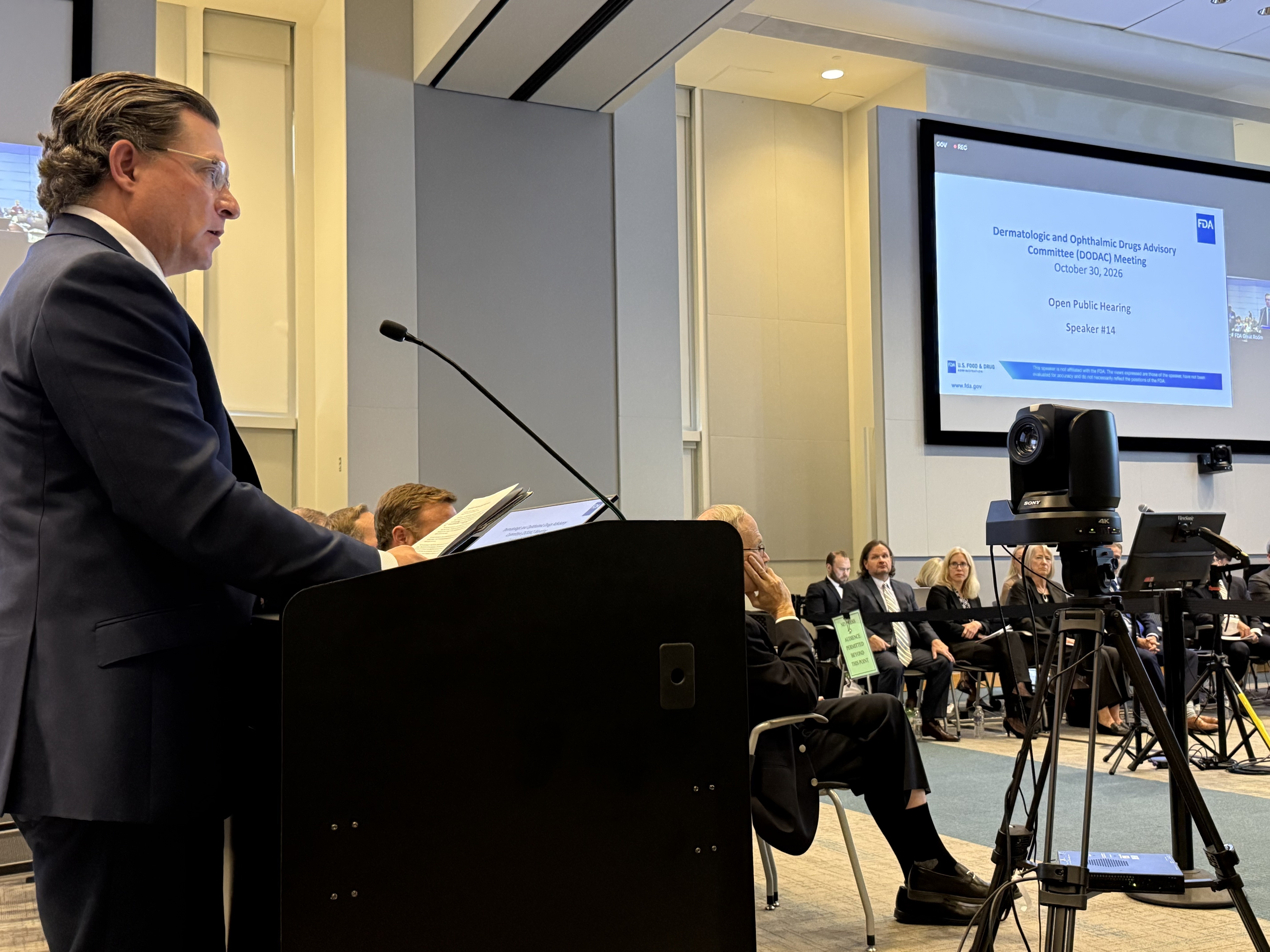
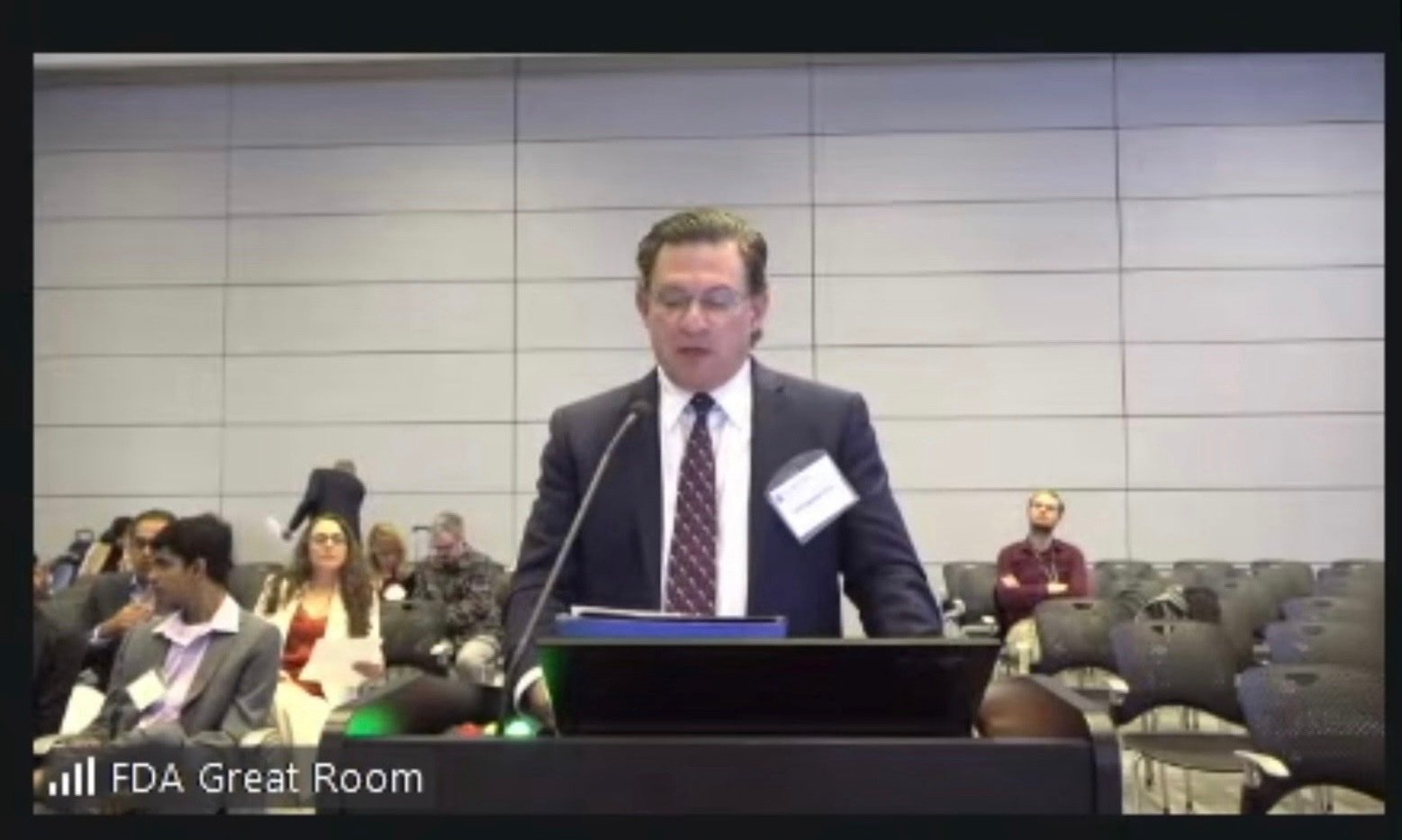
Dr. Aaron Miller, one of our pediatric ophthalmologists who sees patients at The Woodlands and Spring-Klein offices, recently took his expertise to a national stage. On October 30, 2026, he spoke before the U.S. Food and Drug Administration's Dermatologic and Ophthalmic Drugs Advisory Committee in Silver Spring, Maryland.
The committee met to review a proposed eye drop for slowing nearsightedness in children, a condition Dr. Miller treats every day. We are proud to have him represent Houston-area families and pediatric eye doctors in this important conversation.
Dr. Miller's Role
Dr. Miller served as an investigator in the STAR trial, the large clinical study behind the application. He addressed the committee during the meeting's Open Public Hearing, sharing his firsthand experience alongside pediatric ophthalmologists, optometrists, retina specialists, parents and patients from across the country.
He brings deep leadership experience to that role. Dr. Miller is a former Secretary for Member Services of the American Academy of Ophthalmology and a past president of the American Orthoptic Council.
What the Committee Reviewed
The committee discussed an application for a low-dose atropine eye drop (atropine sulfate ophthalmic solution 0.01%) for slowing the progression of myopia in children 3 years of age and older.
The STAR trial enrolled 847 children ages 3 to 14 in the United States and Europe. The same formulation is already approved in the European Union and United Kingdom. In the U.S., eye doctors currently prescribe low-dose atropine through compounding pharmacies, but no FDA-approved medication exists for slowing myopia in children.
Why Childhood Myopia Matters
Myopia, or nearsightedness, makes distant objects look blurry. In children, it often worsens year after year as the eye grows, and that change is permanent. Higher levels of myopia raise the lifetime risk of serious conditions such as retinal detachment, glaucoma, cataracts and myopic maculopathy.
That is why so many clinicians at the hearing emphasized early detection and treatment. Younger children who are progressing quickly may have the most to gain from starting care early.
What Happens Next
FDA advisory committees provide independent, non-binding advice, and the agency makes the final decision. No vote was held at this meeting, and reports from the meeting noted that the panel raised questions about the study data. The FDA's decision is still pending, and they will share updates as they become available.
Schedule a Visit with Dr. Miller
Does your child squint to see the board, sit close to the TV or have a parent who is nearsighted? A comprehensive pediatric eye exam is a great first step, and Dr. Miller can talk with you about myopia management options that fit your child.
Dr. Miller sees patients at The Woodlands and Spring-Klein offices. To schedule, call 281-363-2155 or visit the Book An Appointment page.
Sources